"Avoid A Claim" Blog

practicePRO's blog helps you avoid legal malpractice claims
Subscribe

Planning ahead for interruptions during the week of G20 Summit

June 09, 2010 By: DanPinnington Category: Announcements

Prudent lawyers should be considering what impact the G20 Summit may have on their ability to access banks, the courts and other downtown Toronto services in the week leading up to and during the Summit – June 21-27.

I have heard from a few sources that several of the banks will be closing their downtown Toronto core branches during part of the week of the G20 Summit. This is unfortunate timing as this is one of the busiest times of the year for real estate transactions. If you are handling real estate transactions or other matters involving banks in the downtown core, you would be well advised to call the bank now to determine if you need to make alternate arrangements, particularly for Thursday and Friday, June 24 and 25. It is our understanding that the Toronto Land Registry Office will be open during regular business hours.

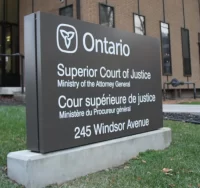
While there has been no official communications from the courts, litigators would be well advised to consider what alternative arrangements can be made with respect to matters that are scheduled to be before the courts during the week leading up to the G20 summit. They should also consider whether pleadings and other court documents that must be filed during the same week can be filed early.

From an eblast sent by the Law Society this morning, the Law Society offices and the Great Library will be closed on Friday June 25. Online services from the Great Library will continue to be available.

Like other businesses located in downtown Toronto, LawPRO expects to be affected by traffic restrictions and other preparations for the G20 Summit from June 21 to 27. We are planning to be fully operational from Monday, June 21 to Thursday, June 24, but suggest that you avoid any visits to our offices that week. If you have cheques or forms to drop off, or need to meet with a member of our staff, please do so by June 18 or after June 28.

Note that on June 25 our reception service will be limited. We will have only skeleton staff at 250 Yonge. However, the TitlePLUS department will be operational on June 25, from 8:30 a.m. to 7:00 p.m.

We expect all electronic resources, such as our websites, to be fully operational.

Updates on LAWPRO operations during the Summit will be posted on our website www.lawpro.ca

Succession planning tips for lawyers

June 08, 2010 By: DanPinnington Category: Practice aids

Sharon Davis at Hull & Hull has a new blog entry reminding lawyers that while they often remind clients of the importance of good estate succession planning, they should also give thought to succession planning for their own practices.

Will your clients be looked after in the event of your sudden death or incapacity? You’ll find some good practical tips here, including: making arrangements in advance with another lawyer, having your critical information stored in an easily accessible (to the assisting lawyer, at least) location, and having appropriate Powers of Attorney in place. You’ll also find links to guidelines and toolkits offered by the Law Societies in Ontario and British Columbia as well as from the Solo & Small Firm Conference held in Toronto recently (this material can be purchased online).

Cross posted at Slaw.ca

Avoiding Confusion And Claims When Making Charitable Bequests

June 02, 2010 By: DanPinnington Category: Wills/Estates

This post comes from the Practice Tip column in the most recent issue of LAWPRO Magazine (which will hit the desks of Ontario lawyers in a few weeks). A hat tip to LAWPRO claims counsel Pauline Sheps for suggesting this great tip – unfortunately it is a malpractice claim scenario she sees all too often.

Many wills include one or more bequests to charitable or religious institutions. In spite of the testator’s good intentions, these bequests often lead to claims when there is confusion over which institution was to receive the bequest. These mistakes often come to light only when the estate is being distributed – and they can lead to costly and time-consuming litigation when charities fight over the bequest.

Many of the claims reported in this area could be avoided if lawyers took steps to confirm that the information given by the testator is correct when the will is being drafted.

Often testators will give the lawyer a name for the charity that is outright wrong or doesn’t include an indication of its corporate status. For example, the client says “Niagara Cat Shelter” but the real name is “Niagara Falls Cat Shelter Inc.”

In other situations there is ambiguity about which institution was to receive the bequest. For example, a legacy to “the ALS Society” is unclear. Does the testator intend that the bequest go to the provincial association or the national body?

Similarly, a bequest to St. John’s Church can be quite confusing if there is more than one church with the same name in the region. There can also be confusion if the church or charity no longer exists. For this reason, including an address and phone number in the will can be helpful.

It is imperative that lawyers taking instructions for a will ensure that the beneficiary of the bequest exists and that the beneficiary is referred to by its full legal name in the will. Go beyond the name of the charity and ask for an address and phone number. Cross-check the information provided to make sure the charity the testator intends the bequest to go to is properly named. There are a multitude of resources available to confirm the names and addresses of charitable entities. Many charities have websites, and most are referenced in various government and non-government directories.

Taking the time to check the proper name of an entity and confirming that information with the testator can avoid a potential negligence claim in the future.

A copy of this Practice Tip column is available here.

Cross posted on Slaw.ca

Provincial, Territorial and State Lawyer Licensing Databases

May 26, 2010 By: DanPinnington Category: Fraud prevention

I have had calls from lawyers in the midst of handling apparent fraud attempts who were wanting to verify whether the lawyers named as the drafter of the collaborative family law agreements presented to them by the fraudsters were in fact real lawyers. There were names and signatures in the agreements – but nothing else. No firm names, telephone numbers, addresses etc. Red flag!! Searches of the internet failed to turn up anything.

So where can you go to attempt to establish if you are dealing with a real lawyer that is in good standing?

A newly updated LLRX article, A Compilation of State Lawyer Licensing Databases, has a great list of the lawyer licensing databases, as well as the phone number for each licensing authority for 43 states.

And, here is the same list for the Canadian provinces and territories :

Cross posted on Slaw.ca and Lawyer Success Tips

Peg Duncan’s Canadian focused e-discovery reading list and case law digest updated

May 05, 2010 By: DanPinnington Category: Legal technology, Practice aids

Updated versions of Peg Duncan’s amazing Canadian focused e-discovery reading list and case law digests have just been posted, respectively, on the e-discovery page on practicePRO’s website and on the Ontario Bar Association’s site. Both are extremely helpful resources for lawyers that need to deal with electronic discovery related issues.

Cross posted on Slaw.ca

Update on Work of CBA Task Force on Conflicts

April 29, 2010 By: DanPinnington Category: Conflicts of Interest, Practice aids

The CBA Task Force continues to work to help the profession with conflicts issues.

On top of the original report and the amended model code of conduct, there is the excellent collection of precedent documents and checklists in the CBA Conflicts Task Force Toolkit. A full list of the documents in the toolkit is here. I am a member of the Task Force did a lot of work on the Toolkit. I think it is truly a fantastic collection of resources that can help lawyers avoid conflicts of interest claims.

There is also an overview and list of recent cases on conflicts of interest matters.

The Task Force is now working on a universal annotated engagement letter. This engagement letter precedent will be adaptable for use in a wide range of areas of law and types of practice. The goal is to provide practitioners with a template that they can easily customize for every client.

To help us prepare an engagement letter that is truly useful and helpful for all lawyers, CBA has just sent its members a survey of how and where they use retainers and engagements letters, and in what circumstances they are not used. If you are a CBA member, please complete the survey as your feedback will help us with this work.

If you would like a direct email notice when the CBA model engagement letter is released, please provide your email address here.

Cross posted on Slaw.ca

5th Annual LSUC/OBA Solo & Small Firm Conference & Expo

April 12, 2010 By: DanPinnington Category: Announcements, Upcoming presentations

Now that spring is in the air, its time again for the LSUC/OBA Solo & Small Firm Conference & Expo.

This conference brings together the best presenters on technology and practice management issues and it is a great chance for small firm lawyers to get together, network, and get practical advice from other lawyers who face the same issues and challenges. Presentations this year touch on topics such as disaster & succession planning, HR and staffing issues; running a virtual law office, social media and networking; running a paperless office and technologies you should be using in your office. And that’s just to list a few. The full Conference schedule and list of presentations can be found in the program flyer. Lawyers can also visit the Exhibitors Hall, which will feature products and services from a wide variety of companies.

I am pleased to be co-chairing the conference for the fifth time, along with Donna Neff. I will also be a presenter. My sessions include the always popular 60 tips in 60 minutes opening plenary; one on time and email management, and one on Microsoft Word, Excel and PowerPoint tips and tricks.

This is a conference organized by and for solo and small firm lawyers and it gets better every year. If you haven’t been before, make a point of attending this year. You’ll come away with new ideas and new contacts and you’ll have a great time as well! You can also attend via the web as several of the sessions will be webcast and others will be available for viewing across the web afterwards. I hope to see you there.

Plan for success with a law firm business plan precedent and sample budget

April 01, 2010 By: DanPinnington Category: Practice aids

It was great to be quoted on the benefits for law firms of having a business plan in the April 2, 2010 Lawyers Weekly

There is great advice in this article. Unfortunately, it fails to mention that practicePRO also provides lawyers a sample law firm business plan (in Word) and a law firm budget template (an Excel spreadsheet). PDFs of both documents are also available, and all can be found on our Precedent Documents and Retainers page.

New and established lawyers alike can use these documents to plan for a more successful future.

Cross posted on Slaw.ca

How to remove info from Google

March 31, 2010 By: DanPinnington Category: Legal technology

Google’s Webmaster Central Blog has released the first in a series of entries telling people how to removew URLs & directories from Google searches. A hat tip to Simon Fodden over at the www.slaw.ca blog.

Please Deposit My Bogus Cheque So I Can Give The Money To An Orphanage

March 31, 2010 By: DanPinnington Category: Fraud prevention

I continue to get daily emails and phone calls from Ontario lawyers that are finding themselves the targets of attempted frauds. The fraud attempts I am seeing are definitely getting more polished and sophisticated. In this post I want to highlight some of the changes in tactics the fraudsters are using so lawyers can better recognize the red flags of a problem deal.

A good example comes from call I got early last week from an Ontario lawyer that was in the middle of dealing with a matter that was clearly an attempt to dupe him with a bad cheque.

The lawyer was initially contacted by phone (not email) by a woman who wanted to retain him for help with collecting support from her ex-husband. For the initial identification she provided (a scanned copy by email) an Illinois driver’s license that looked legit. Things were otherwise looking normal at this point, although there was no apparent connection with Ontario. This made the lawyer hesitate and he asked for further identification so as to verify the identity and location of the woman. At this point the story changed a fair bit. The woman indicated she was actually on assignment in Japan and, you guessed it, her ex-husband was willing to make an immediate payment.

At the time the story changed, there was still no apparent rationale for the ex-husband to be making a payment through an Ontario lawyer’s office. This prompted the lawyer to ask some more pointed questions in calls with the woman to get some more background. The woman always had a quick and somewhat reasonable answer to the lawyer’s questions, but all the answers fell short of being entirely satisfactory.

Next, without any warning or indication it was coming, the lawyer received by registered mail (in an envelope that had a hand-written addresses on it) an uncertified cheque for $198,280. It appeared to be from an insurance brokerage and was written on a Brampton branch of BMO. The cheque looked totally legit to the lawyer. The head teller at the lawyer’s bank (not BMO) told him that the cheque appeared to be fine. The lawyer then called the insurance brokerage named on the cheque and a cross-check of the cheque number confirmed that it was a real cheque that had been issued to someone else for $280.00.

The woman called just after the lawyer got the cheque (Good timing!!) and told him to take his fees from the cheque after it had been deposited. The woman now asked that the remaining funds be wired to an account in China. Her reason was simple – she indicated that she had already pledged the funds to a charity there.

At this point the lawyer advised the woman he would not be acting on the matter as it was clearly a fraud and that he was returning the cheque to the real issuer. This did not deter her. The woman called back again and pushed hard for the lawyer to cash the cheque – and the explanation got more urgent – please pay up as I have pledged money to an orphanage and they need it to finish some building they are doing. Unbelievable!

There are several lessons to be learned from this and the other similar fraud attempts I am seeing:

  • Initial contacts from the fraudster may not be via an impersonal and badly worded email. In this case it was by phone (and we have seen attempted and successful frauds where the fraudster came to the lawyers office multiple times). And the emails are getting better too. Some of the initial contact emails provide background that establishes a connection to Ontario.
  • Carefully check and cross-verify client identification, especially if there are any questions as to where the client is or if there is not apparent connection to your jurisdiction
  • Carefully gather relevant background facts and information, especially if the information provided by the fraudster is incomplete or inconsistent
  • Carefully look at the labelling and sender’s address on the package or envelope that the cheque was delivered in. Handwritten addresses are common and it often appears that the packages were sent from a location that has no connection to the people involved in the matter.
  • Carefully inspect the cheque or bank draft. Take it to your bank to see if they can verify it. If you think you are dealing with an inexperience teller ask for a more senior person to look at it (I really wish banks would be more willing to help verify cheques). Call the branch which holds the account the cheque was written on (and don’t use the phone number or address on the cheque (they will put you in touch with the fraudster) – get it from the bank or financial institution’s website). Call the payor named on the cheque to see if it actually made the payment (and get contact info from an independent source – not off the cheque), especially if the payor doesn’t look connected to the matter (from the example above, a insurance brokerage making a spousal support arrears payment).

The bottom line: If things don’t add up – ask more questions and don’t let the client bully you into making a payment on matter that is a real or apparent fraud.

From articles like these it is clear that thousands of lawyers are being targeted: Bad-Check Schemes Targeting Lawyers Are Increasingly Sophisticated and How to avoid becoming a fraud victim. Take precautions and don’t be one of the unlucky ones that are fooled.

Use the free fraud prevention resources on the practicePRO Fraud Page (www.practicepro.ca/fraud) to help the lawyers and staff in your firm avoid being duped. In particular, these resources will help you and your staff avoid being duped:

Download our Fraud Fact Sheet and give it to the lawyers and staff in your office. It lists the common types of bad cheque and real estate frauds and the red flags that will help you spot a fraudulent matter.

Listen to the archived LAWPRO webinar presentation on what frauds look like and how to avoid them. Access the MP3 (audio) file and the program PowerPoint and materials.

Cross posted on Slaw.ca