
New Fraud Scheme: Insurance Settlement Funds

A new fraud scheme involving insurance settlement funds has a familiar end: the cheque is no good.
The scheme commences when fraudster approaches a lawyer, usually with no previous relationship, asking the lawyer to review settlement documents, provide ILA, and receive the settlement funds into the lawyer’s trust account. To make the fraud attempt more convincing, the documents bear the name of a real insurance company. No retainer fee is provided upfront.
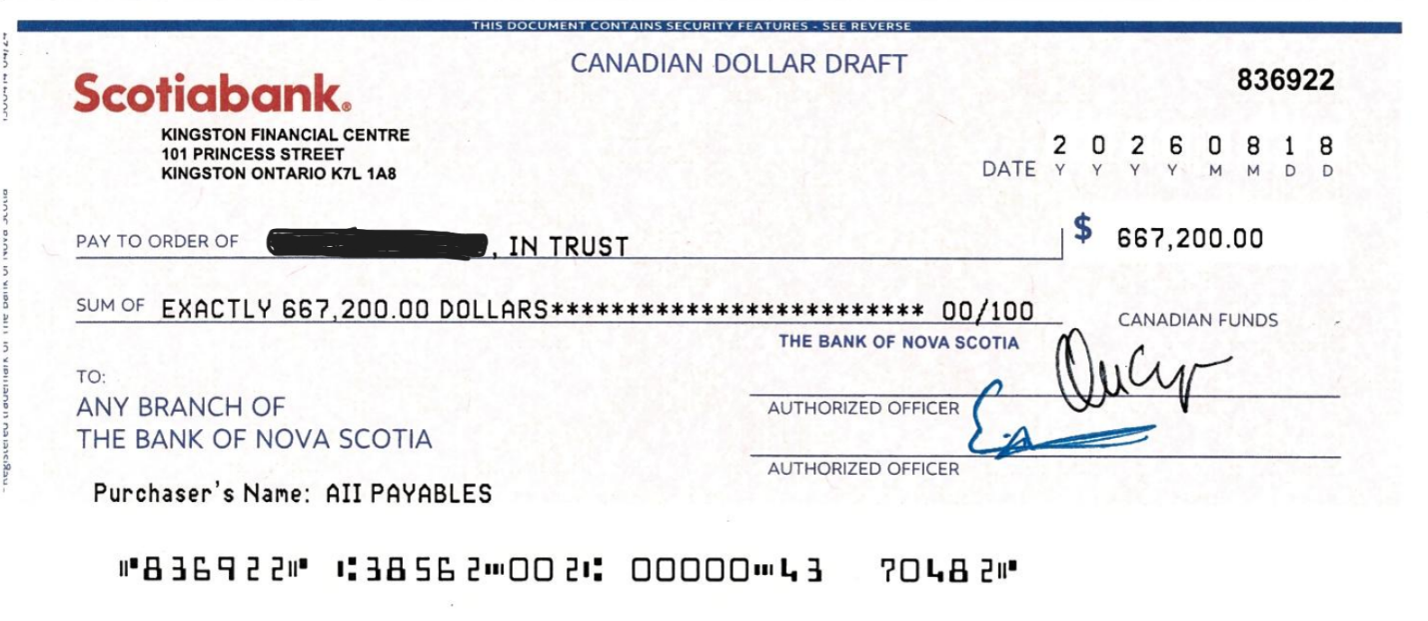
Recently, we have had several lawyers report that the settlement funds are by way of brank drafts in the amount of $667,200 (copy of the cheque below) or $486,200, although fraudsters can certainly use other amounts. An internet search for the company leads to a website that belongs to the fraudsters; the real Ontario-based mutual insurance company, located outside the GTA, does not have a website.
As things unfold, the lawyer receives the cheque deposits it, and sees the funds “appear” in the trust account. Then comes the pressure: the “client” wants the money released as soon as possible. The lawyer disburses the funds, but within a few days, the cheque bounces. The fraudster is gone.
Red flags
- The client has no previous relationship with the lawyer/law firm.
- The matter seems unusually straightforward.
- The client is primarily interested in getting money into and out of your trust account quickly.
Risk management steps
- Do not release funds simply because it looks like the funds are in your account. A certified cheque and/or bank draft can be credited to the account and subsequently reversed. See the resources section below for information on how to ensure the funds are irrevocable.
- Before treating the matter as legitimate, independently contact the company using contact information you obtain yourself. Confirm that the file or claim number exists and that the settlement is genuine. Be alert to the possibility of a fraudulent website. In one case, the fraudster created a convincing duplicate website for the insurance company, including a phone number that went directly to the fraudster.
Resources
Leave a Reply